



AWS made it possible to start a tech company with just a credit card. Pay only for what you use, scale instantly when you succeed.
Guangzhou offers the same revolution for physical products—prototype with hundreds, scale to millions, no factory required.
I’ve just returned from China’s Greater Bay Area and experienced this firsthand.
The Manufacturing Revolution
Guangzhou and its neighbors—Shenzhen, Dongguan, Foshan—form the Pearl River Delta manufacturing cluster. Decades of development have created an ecosystem so dense that suppliers, manufacturers, and assemblers for almost any product sit within hours of each other.
I took this trip to visit some of these wholesalers and it’s amazing how much they can do.
Walking through the wholesale markets, I saw many products that retail in Singapore and on online platforms selling at a fraction of the price. Take compression boots, for example—under $200 here. A similar device with a different brand slapped on in a Singapore mall near my house? Around $1,000.
Five times the price. Similar product.
I’ve known friends who’ve come here with specifications for products, whether clothing retail or electronics, and they’re able to establish their products and start selling abroad very quickly. All without ever having to sink heavy investments into building a factory or dealing with hiring anyone to produce these items.
It’s not just that prices are great. You aggressively derisk the maximum you can lose from having to sink huge capital. It can also get extremely technical based on your product requirements.
This reminds me of AWS’s transformation of software startups. The success stories—Netflix, Airbnb, Slack—all built on that infrastructure.
Guangzhou provides the same for physical products.
Entrepreneurs can prototype, iterate, and scale production using existing manufacturing infrastructure, paying only for what they produce.
Take Anker, famous for its affordable yet high-quality mobile charging accessories. They’ve built a global brand by not owning factories, instead working with third-party manufacturers while focusing on design, innovation and branding.
And they’re not the only one—thousands of products on Kickstarter are only possible because of this manufacturing hub.
Reading Patrick McGee’s Apple in China before this trip added another layer to what I was seeing. Apple moved all its manufacturing to China by 2009, inadvertently creating a technological superpower. They trained millions of workers, sent thousands of engineers across the Pacific, spent hundreds of billions building China’s electronics capabilities.
Now that expertise flows into everything—from leg massagers to hair dryers to Kickstarter dreams.
All the Pieces Coming Together
Of course, manufacturing is only one piece of the puzzle.
There’s Amazon with its reach to a massive audience and warehouse logistics services that allows businesses to scale without bothering with delivery and payments. There’s social media which allows businesses to target consumers with very little upfront capital, as opposed to the past where only big companies had money to advertise on traditional media.
All these pieces come together allowing younger, newer, more nimble competitors to enter the market.
Sometimes they challenge incumbents by bringing down prices. Other times they come up with more innovative solutions altogether.
The Laifen hair dryers in hotels across China cost around $50. Dyson? $600.
The performance difference? About as noticeable as the taste difference between Pepsi and Coke.
We’ve also seen DJI and Insta360 run laps around GoPro in their offerings. If businesses can’t innovate fast enough, they’re going to be left behind.
This changing landscape created lots of new value, with some accruing to these newer, more nimble businesses. Consumers capture a nice chunk of the value as competition intensifies.
The manufacturing revolution is just one part of what I observed. China’s tech ecosystem has its own unique rhythms and rules.
Navigating China’s Tech Ecosystem
Every trip, I get a local SIM card for calling and data. You need it to tap into the full ecosystem.
Especially with Meituan and Dianping if you’re a foodie. I also do online shopping pretty heavily while I’m there.
One key difference from Singapore or the US is that deliverymen in China, whether from Taobao (Alibaba) or food delivery (Meituan), always call and seek your acknowledgment when delivering. Without a Chinese number, it’s hard to take advantage of everything the tech ecosystem offers.
But that also means the great firewall prevents me from using the LLMs that have been such an integral part of my life—Claude and ChatGPT.
On the first day, I had to use DeepSeek for my daily tasks—research, responding to my tour guide in mandarin, planning.
I’d tested DeepSeek during its Sputnik moment in January 2025 and found it comparable to ChatGPT. But now, having to use it due to the firewall, I realized just how rapidly Claude and ChatGPT have advanced. These models improve incrementally day by day—you don’t notice until you’re forced to switch between them.
The pace of AI development is staggering.
I ended up getting LetsVPN to access Claude and ChatGPT again—reliable for short China trips if you need Western services.
LLMs Everywhere
During my daily hour at cafes, coffee in hand, doing my reading, I noticed something.
Many people around me were perpetually on LLM tools. Not just occasionally checking—constantly working with them.
DeepSeek and ChatGPT being the two most common.
Singapore currently has the highest per capita LLM usage, but I wonder how we fare compared to tier 1 China cities. When they work, they’re perpetually on it, showcasing how fluent they are with the tool.
And to my pleasant surprise—a break from all the AI—I even spotted people reading Warren Buffett books in cafes. Value investing is clearly making inroads here.
My Experience With Social Commerce
This trip I’ve also used XiaoHongShu (Little Red Book), which made splashes earlier this year when TikTok was banned in the United States.
Think of it as Instagram, with posts and short videos dominating search results. It gives pretty good ideas on planning China trips with solid recommendations for drivers and tour guides.
Lots of these services still have high customer touch points. I’ve found their services very delightful when working out plans on WeChat after finding them on XiaoHongShu.
The prices? 20% to 30% cheaper than what you’d find on platforms such as Klook, Trip, or Meituan.
The transactions still happen on WeChat, but the discovery and initial connection come through social platforms—a partial social commerce experience that works remarkably well.
The major caveat: you must be fluent in mandarin, or in my case, use ChatGPT, which handles translation very well, taking into account nuances of writing style.
The Changing Competitive Landscape
This trip I’ve also noticed a lot more JD riders.

Ever since Richard Liu made a comeback, he’s waged war on food delivery, driving Meituan’s operating margins from 13% to effectively 0%. Both companies are burning profits from their profitable businesses to fight this war—Meituan to protect share, JD to capture share.
Liu is prepared to lose money for years in the name of customer acquisition. Food delivery isn’t a particularly profitable business in China, but it’s about what happens after you get consumers in. Because it’s a high-frequency service, it makes your app—your ecosystem—more sticky. He claims 40% of new food delivery users convert to JD e-commerce customers. As he puts it, the losses are more cost-effective than buying traffic from Douyin or Tencent.
Both Meituan and JD are formidable companies, and it’s unclear how long this cutthroat competition will continue. But for now, consumers and F&B businesses benefit.
For those interested in the investment implications, I unpacked the second-order effects in “The Vacation May Be Over” for Steady Compounding Insider Stocks members.
Final Thoughts
Beyond the incredible food and culture, Guangzhou showed me how manufacturing has been democratized, how it has made it possible to come in with an idea, experiment, iterate and then scale.
Here are some highlights from the trip:
Dafo Temple (Great Buddha Temple), Beijing Road

Chen Clan Ancestral Hall

A national heritage site showcasing Lingnan’s seven classic decorations. Pro tip: Get a tour guide to explain the intricate folk artistry—you’ll miss half the beauty without context.
That Pistachio-Chocolate Affogato from Coffeelin

This dessert-coffee combination blew my mind. Worth the trip alone.
Canton Tower at Night

Dim Sum Adventures


Guangzhou Jiujia (local’s recommendation) and Dian Du De—both exceptional. Despite eating like this daily, I lost 1.5kg from walking 12,000+ steps exploring the city.
Baiyun Mountain Summit
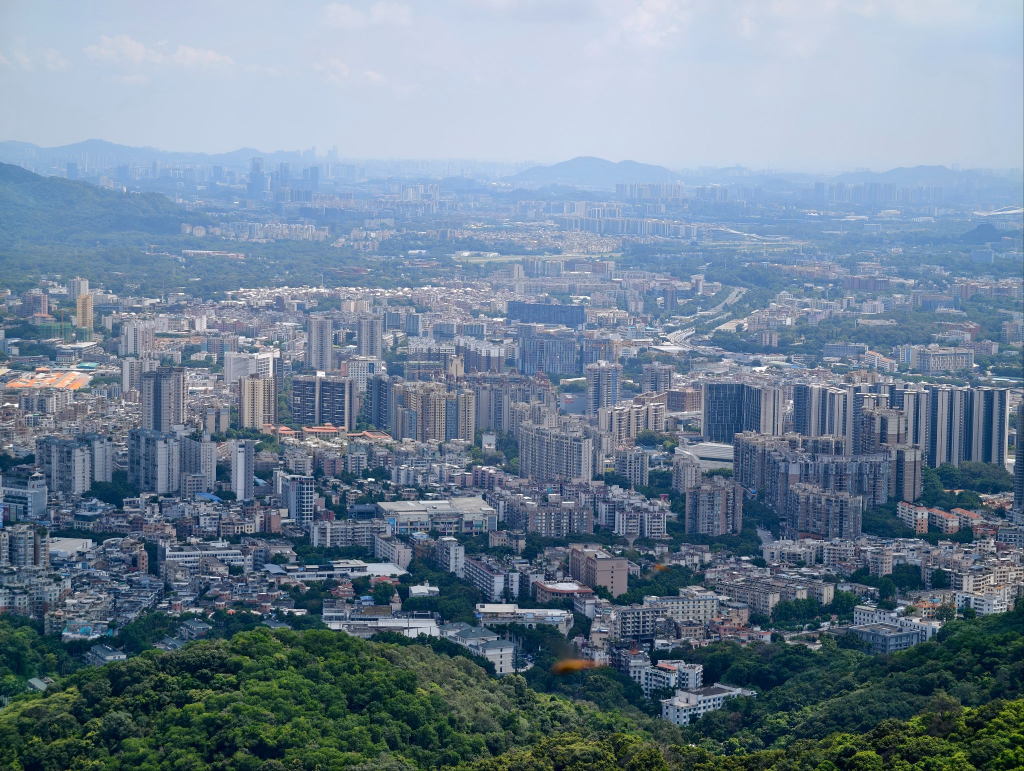
Views of Guangzhou stretching to the horizon.
Birthday Surprise at 30,000 Feet

Singapore Airlines made the journey extra special.
Thanks to everyone who sent recommendations! I’m heading to Bangkok next—send your favorite restaurants my way.
Compound steadily,
Thomas
hell yeah ! looks like a blast mate. i cant wait to be back :’)
Yeah Kalani! Guangzhou is awesome, probably one of my favorite China cities right now, along with Xi’An.
Thanks for the sharing Thomas! Looks like I have to execute operation China revisited. Happy Belated !
Thanks CM! Yeah China is definitely worth a visit especially if you haven’t been in awhile. The tech ecosystem there is eye-opening.
Hey Tom, great conversation we had on the way to the airport.
If you could please send me the model of the phone you mentioned. Ultra….
I want sure is it Xiaomi or V?
It was a Vivo x200 ultra!