


Forced Sellers Don’t Get a Time Horizon
Three weeks ago I wrote about the memory chip boom and why I wasn’t chasing it. I compared the hyperscalers to shoppers panic-buying toilet paper in 2020, and admitted I have no edge in guessing when a memory cycle turns. You can read the piece here.
I still don’t. But the turn came quick. At their lows this month, Samsung and SK Hynix were down more than 25% from their June highs, though both are still up huge for the year, Samsung roughly doubling and SK Hynix nearly tripling.
What made it violent was where the buying had come from. Korean retail investors had piled into the two stocks with record margin debt, plus a fresh batch of 2x single-stock ETFs launched in May. Together, Samsung and SK Hynix make up close to half the KOSPI’s market cap. So when the shares slipped, margin calls forced selling, the selling pushed prices lower, and lower prices triggered more calls.
Last Monday the KOSPI fell nearly 9% in a day, tripping a circuit breaker, and SK Hynix had its worst day on record. By then, Goldman Sachs counted more than 1.2 million trading accounts hit with margin calls, roughly one in every 30 working-age adults in the country. Over 320,000 accounts were liquidated outright, and some were left owing the broker money even after the shares were gone.
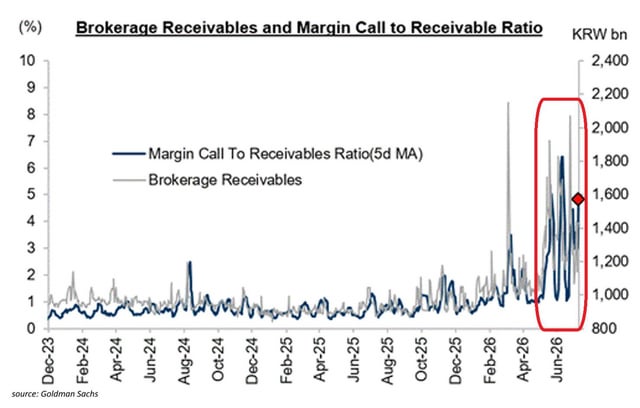
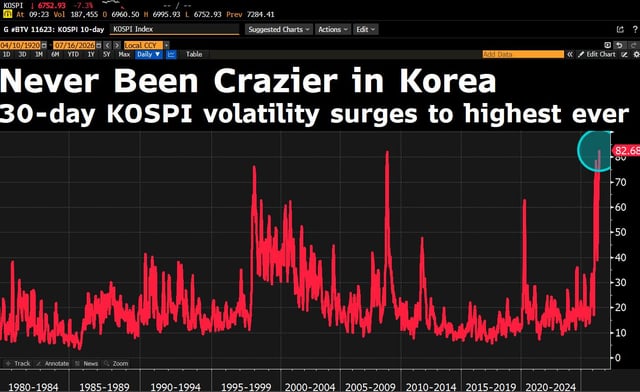
The KOSPI’s 30-day volatility is now the highest ever recorded.
The detail worth remembering is that Samsung reported record quarterly results right in the middle of this. The selling had little to do with the business. Once you’re on margin and the price falls far enough, your view on AI demand stops mattering. The broker sells whether you agree or not.
I wrote in June that if you have a genuine edge in timing this cycle, this is your moment. Korea just showed us the other half of that sentence. Plenty of people got carried out, because they were on borrowed money. A margin call is the market taking your time horizon away.
Compound Steadily,
Thomas
P.S. My book The Lunch Break Investor is about the other way of doing this: a steady job, an hour a day, and a portfolio nobody can call away from you. Pre-orders are open here.
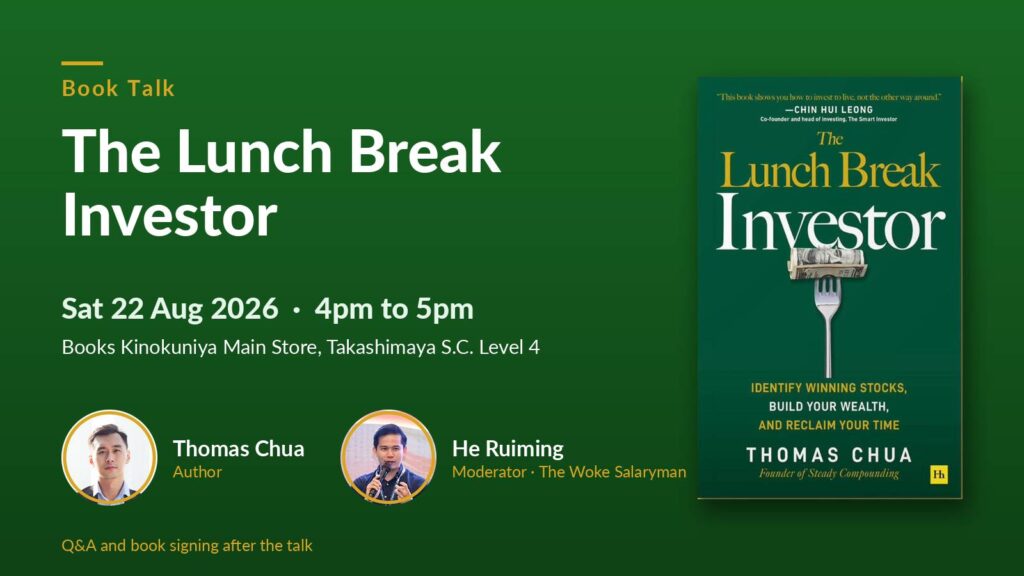
P.P.S. For readers in Singapore: I’m giving a book talk at Kinokuniya’s main store in Takashimaya on Saturday, 22 August, 4pm to 5pm, moderated by He Ruiming of The Woke Salaryman. Come say hi. Details here.
I. The Best and Worst Days Come as a Package Deal
You’ve probably seen the stat that missing a handful of the market’s best days wrecks your long-term returns. A reader asked Ben Carlson whether that stat is the real reason Bob, his fictional world’s worst market timer, still came out fine despite buying only at market peaks. Was Bob accidentally catching the best days by refusing to sell?
Carlson runs the numbers on $1 invested in the S&P 500 since 1990, dividends reinvested:
Invested all days: $40 Missing the 25 best days: $8 Missing the 25 worst days: $236 Missing both: $47
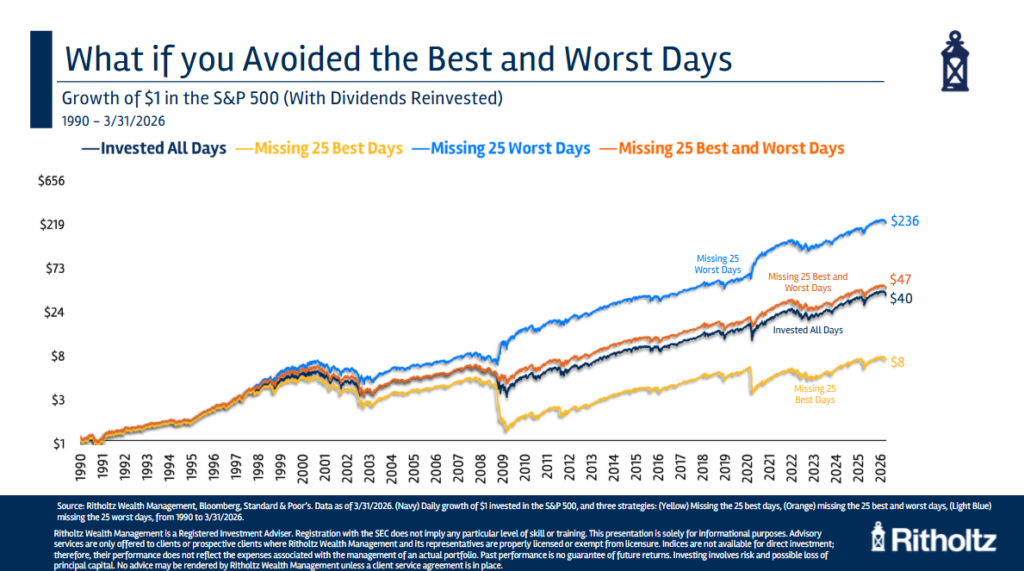
That $236 line is what makes timing look so tempting. Nobody pulls it off, and the second chart shows why. The best and worst days cluster together, mostly around the dot-com bust, the 2008 crash, the Covid crash and the 2022 bear market.
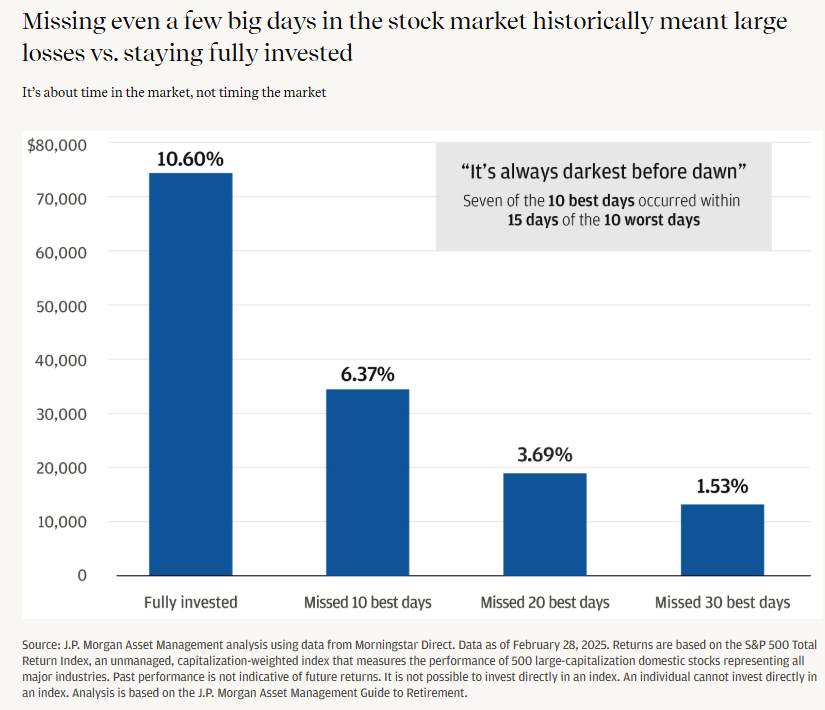
Crashes force selling through margin calls and fear, then produce the biggest up days through short covering and bargain hunting. Sell to dodge the worst days and you usually sit out the best ones too, because they land in the same stretch.
So no, the clustering didn’t save Bob. He sat through every one of the worst days as well. His saving grace was the long time horizon.
II. Howard Marks on Investing Scared
“If you wait until you have nothing to be afraid about, probably the opportunity has passed.”
That’s Howard Marks on My First Million this week, retelling what his firm Oaktree did in the weeks after Lehman failed.
Going into 2007, the biggest distressed debt fund Oaktree had ever raised was $2.5 billion, back in 2002. In 2007 and 2008, expecting a lot of distress, they raised $11 billion and kept it on the shelf, ready to go when the stuff hit the fan. Marks makes the point that the money had to be raised before the crisis, because you can’t raise money during one. The news is too terrible.
Then Lehman went under in September 2008, and the talk was of the end of the world, of every financial institution melting down. The trouble with that moment, as Marks tells it, is there is “no pattern recognition for the end of the world.” He cites a Harvard epidemiologist’s line that decisions rest on data, analogies to past experience, and supposition. Oaktree had no data and no precedent to lean on, only supposition.
What resolved it was an asymmetry. If the financial world melted down, it wouldn’t matter whether they invested. If it held together and they had sat on the money, they wouldn’t have done their job. So they went. Bruce Karsh, who runs the distressed funds, invested an average of $450 million a week for 15 weeks, about $7 billion. The prices helped: they were buying the debt of companies private equity firms had bought out two to four years earlier, cheap enough that Oaktree would still be okay if those businesses ended up worth a fourth or a fifth of what the buyers paid.
When the hosts asked how confident he felt, the answer was “absolutely not confident.” Marks has made five major macro calls in 26 years and says every one came with doubt. He reads the same terrible news as everyone else during a crash. The difference is that he overcomes it and invests anyway, because people who see the world probabilistically can’t act without trepidation.
Marks says no sentence starting with “I could be wrong, but” ever got anybody into trouble. The ones that do start with “I’m 100% convinced.”
III. The $31 Billion Alphabet Bet Was Buffett’s Call
When Berkshire’s stake in Alphabet showed up in the filings, the common read was that this was Greg Abel putting his mark on the portfolio. Buffett cleared that up on CNBC this week: “I initiated it.” He added that nothing happens without the other’s approval, and that Greg is now the decider.
Counting the $10 billion private placement, the position sits north of $31 billion, behind only Apple and American Express among the stocks Berkshire owns pieces of.
Asked why, he went back to his definition of a good business: one that earns far more than riskless Treasuries, for a long time. American Express is his example. Most banks earn 13% or 14% on capital. AmEx earns better than 30% without taking on more risk to do it. “The trick in investing is to find businesses that are going to earn high returns on capital for an extended period of time.”
On the AI capex race, he’s clear-eyed about the stakes. Google and its competitors are laying out hundreds of billions, real money, a game they never had to play with software. His view is that based on their record, they’re more likely to be winners “than probably 90% or 95% of what will get merchandised through Wall Street.”
The caveat he kept returning to is durability. In 1958 he helped start Data Documents off the back of an IBM antitrust divestiture, and that advantage ran out within ten or fifteen years. A&P was America’s number one grocer in the 1930s, and that hand disappeared. “It’s not a question of whether it was wonderful yesterday, it’s the question of how long it is going to be wonderful.”
The full transcript went up on the blog on Friday. It also covers Apple, the new Fed chair, and why he thinks values are tougher to find when everybody prefers gambling.
That’s all I have for you today!
Till next week.