


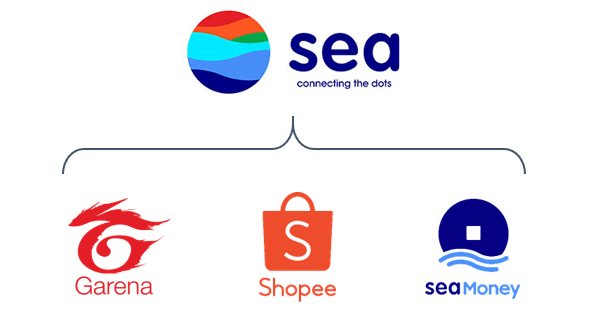
I’m working on a mega deep-dive for Sea Limited right now and it’ll likely be broken into three parts because Sea Limited is a three-headed dragon in three industries enjoying ginormous tailwind: Gaming, eCommerce, and Digital Money.
The first part will be on Garena, where I will be discussing in detail their flagship game Free Fire, the gaming industry and how they fare against competition, and the longevity of the different genres of games.
I will be making this premium report on Garena available for 48 hours only for 3-Bullet Sunday subscribers.
If your friends will benefit from this report, do invite them to subscribe to this newsletter.
The premium report on Garena will be paywalled 48 hours after publishing.
I. Should You Sell and Lock-In Profits?
Readers of my deep-dive on Starbucks (SBUX) would know that I rotated from SBUX into Twilio and other companies such as Sea Limited (upcoming deep-dive).
The share prices have recovered and readers have asked if they should sell to lock in profits, so I’ll share my thoughts:
Nobody ever lost money taking a profit but nobody got really rich taking a profit either.
To generate life-changing wealth in the stock market, you have to find good companies, develop the conviction, and sit through volatility (both up and down).
Not many people discuss upwards volatility, but selling for a quick gain is equally, if not more detrimental to your wealth.
You don’t get rich by locking in 20-30% gains every now and then.
Instead, find companies that can grow their earnings power by double digits for a realllllyyyyy long time.
Focus on business fundamentals, not the movement of share prices. In the long run, share prices will follow business fundamentals.
So when is it time to sell?
- When business fundamentals have changed
- When our investment thesis is proven wrong
- When there’s a better business out there available at a decent price
Share prices moving up alone is seldom a good enough reason to sell.
II. Nick Sleep’s Original Letters

If you haven’t checked out my post on lessons from Nick Sleep, check it out here!
As promised, download the full collection of Sleep’s letters below.
III. The Impact Of Intangibles On Base Rate by Michael Mauboussin
The rise of intangibles as a driver of business value has two implications for corporate growth rates:
- Strong economies of scale – because they are cheap to reproduce; e.g., a software code may be very expensive to produce but the cost per unit drops rapidly because it is inexpensive to share.
- Obsolescence and the concept of sunkenness. The value of intangible assets can drop precipitously when a new and better version comes along.
As intangible investments outweigh tangible investments, we should expect to see faster growth rates for winners than what we have seen historically (or base rate data in fancy terms).
Likewise, obsolescence means that companies that rely on intangible assets will decline at a much faster pace as well.
The point is, an overreliance on what we observed in the past (i.e. base rates), can lead to faulty forecast given the change in the environment/underlying technology infrastructure.
Given the shift to intangible investments, two main lessons for investors:
- Be mindful of the potential shift in the base rate.
- Identify companies that will grow faster than expected, providing the potential for attractive returns.
Read the full white paper below: